
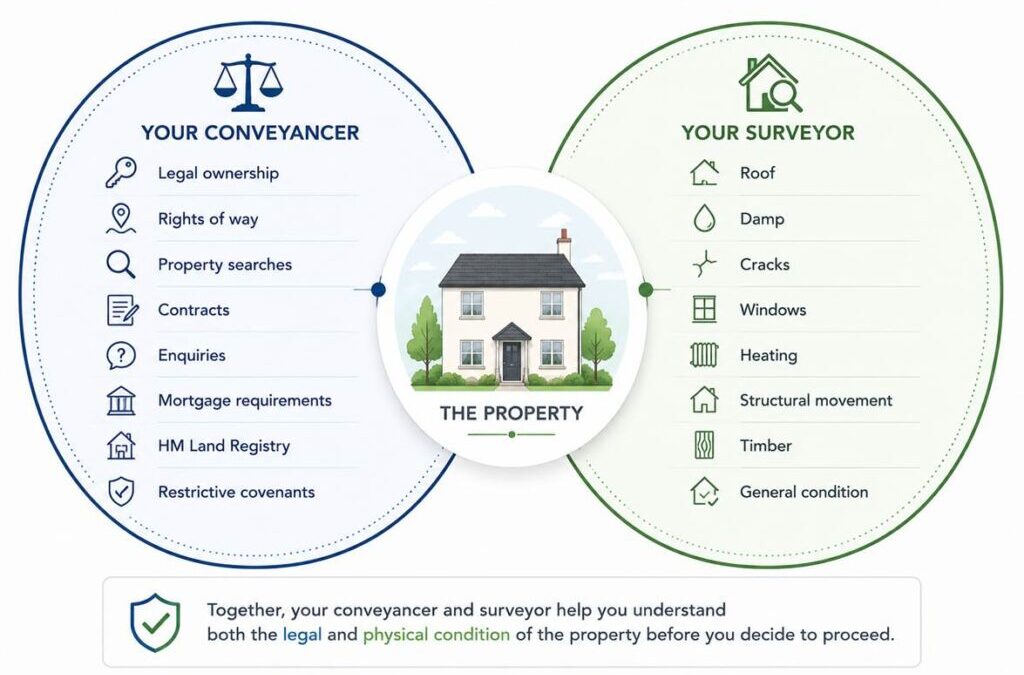
You've found a property you love, your mortgage application is underway and your conveyancer has started the legal work.
Then someone asks:
"Have you arranged a survey?"
It's a common question, and understandably so. Many buyers assume that because they're getting a mortgage, the property is already being thoroughly checked. In reality, that's not always the case.
A survey and the legal work carried out by your conveyancer are two completely different things, and together they help you build a much clearer picture of the property you're buying.
The Short Answer
A survey looks at the condition of the property.
Your conveyancer looks at the legal title to the property.
They work alongside each other, but they investigate completely different things.
Whether you decide to have a survey is your choice, but many buyers feel it provides valuable reassurance before committing to such a significant purchase.
The Explanation
When you buy a property, there are two separate investigations taking place.
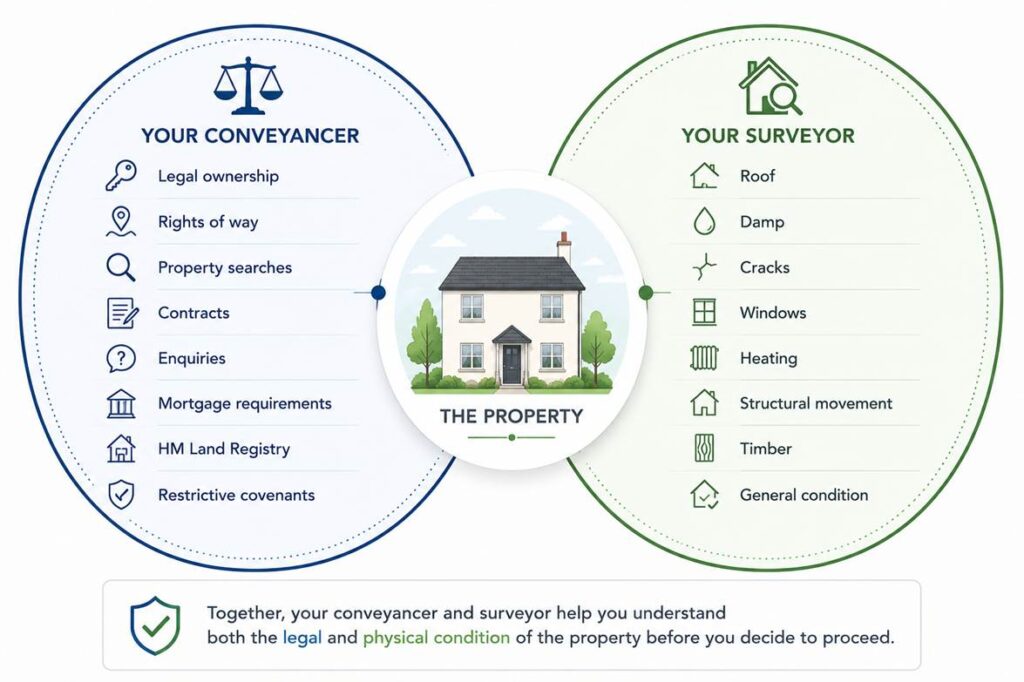
Your conveyancer investigates the legal aspects of the property. They'll review the title, searches, contracts and other legal documents to identify anything that may affect your ownership.
A survey, on the other hand, looks at the physical condition of the property. A qualified surveyor will inspect the building and report on matters such as structural movement, damp, roof condition, timber defects or other issues that may not be obvious during a viewing.
If you're buying with the assistance of a mortgage, your lender may arrange a mortgage valuation. However, this is carried out for the lender's benefit to assess whether the property provides adequate security for the loan. It isn't intended to be a detailed inspection of the property's condition.
If you're unsure which type of survey is right for your purchase, a surveyor will be able to explain the available options and recommend the most appropriate one.
Your Property Purchase - Two Different Investigations
Common Questions
Is a mortgage valuation the same as a survey?
No.
A mortgage valuation is carried out for your lender to assess whether the property offers sufficient security for the mortgage. It isn't a detailed inspection of the property's condition and shouldn't be relied upon as a survey.
Do I have to have a survey?
Not necessarily. Whether you choose to instruct a survey is entirely your decision. However, many buyers decide that a survey provides valuable information about the property's condition before they become legally committed.
Will my conveyancer tell me if the property has structural problems?
Your conveyancer investigates the legal aspects of the transaction. They aren't qualified to assess the physical condition of the property, which is why a survey can be an important part of the buying process.
Top Tip
Even if a property looks to be in excellent condition, some defects aren't immediately visible. A survey can provide valuable information that may help you make an informed decision before Exchange of Contracts.
Did You Know?
Your conveyancer and your surveyor are investigating completely different aspects of the property. One looks at the legal position, the other looks at the physical condition.
Common Misconception
"I'm getting a mortgage, so I don't need a survey."
A mortgage valuation is primarily for the lender's benefit. If you'd like a detailed assessment of the property's condition, you should consider instructing your own survey.
The MA Lawyers Approach
At MA Lawyers, we'll always explain the legal issues affecting your purchase in plain English. However, we also recognise the importance of understanding the property's physical condition.
Whilst we don't carry out surveys ourselves, we'll work alongside your surveyor where necessary and, if your survey identifies legal issues requiring further investigation, we'll discuss these with you and take any appropriate steps as part of your transaction.
Related Articles
- What Are Property Searches and Why Do I Need Them?
- What Enquiries Will My Conveyancer Raise?
- Why Do Transactions Take So Long?
- What Is Exchange of Contracts?