
Many sellers worry that having a mortgage will make selling their property more complicated.
Fortunately, in most cases, it doesn't.
If you have a mortgage secured against your property, it's perfectly normal. Your conveyancer will deal with the legal process of redeeming the mortgage as part of your sale, allowing ownership to be transferred to the buyer free from your lender's legal charge.
Understanding how this works can help you know what to expect as your sale approaches completion.
The Short Answer
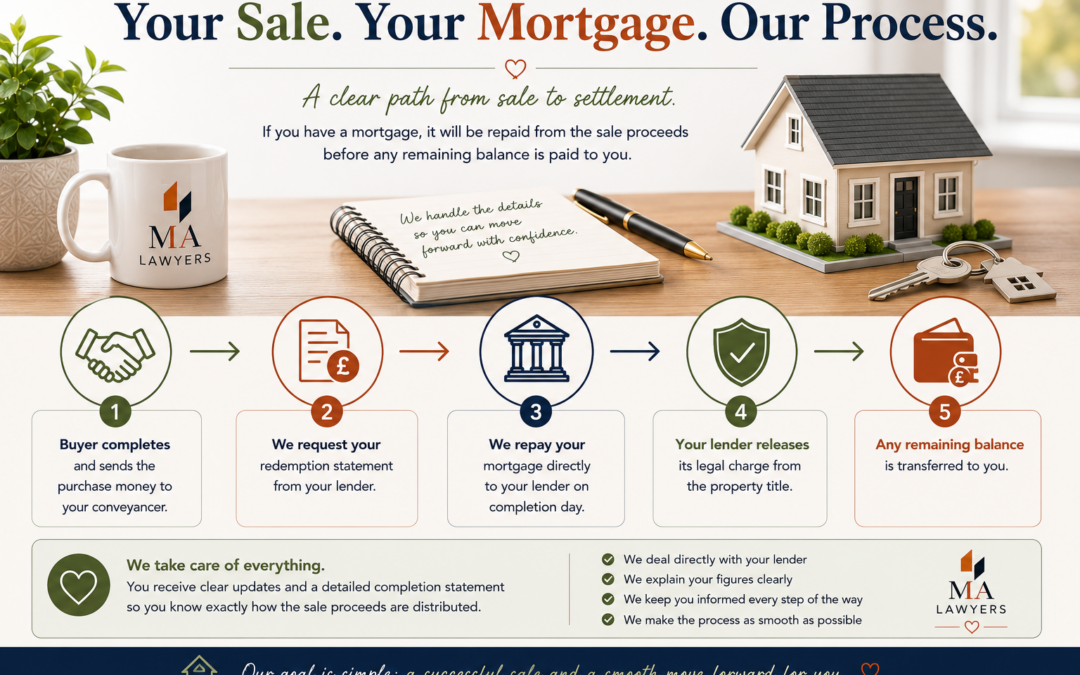
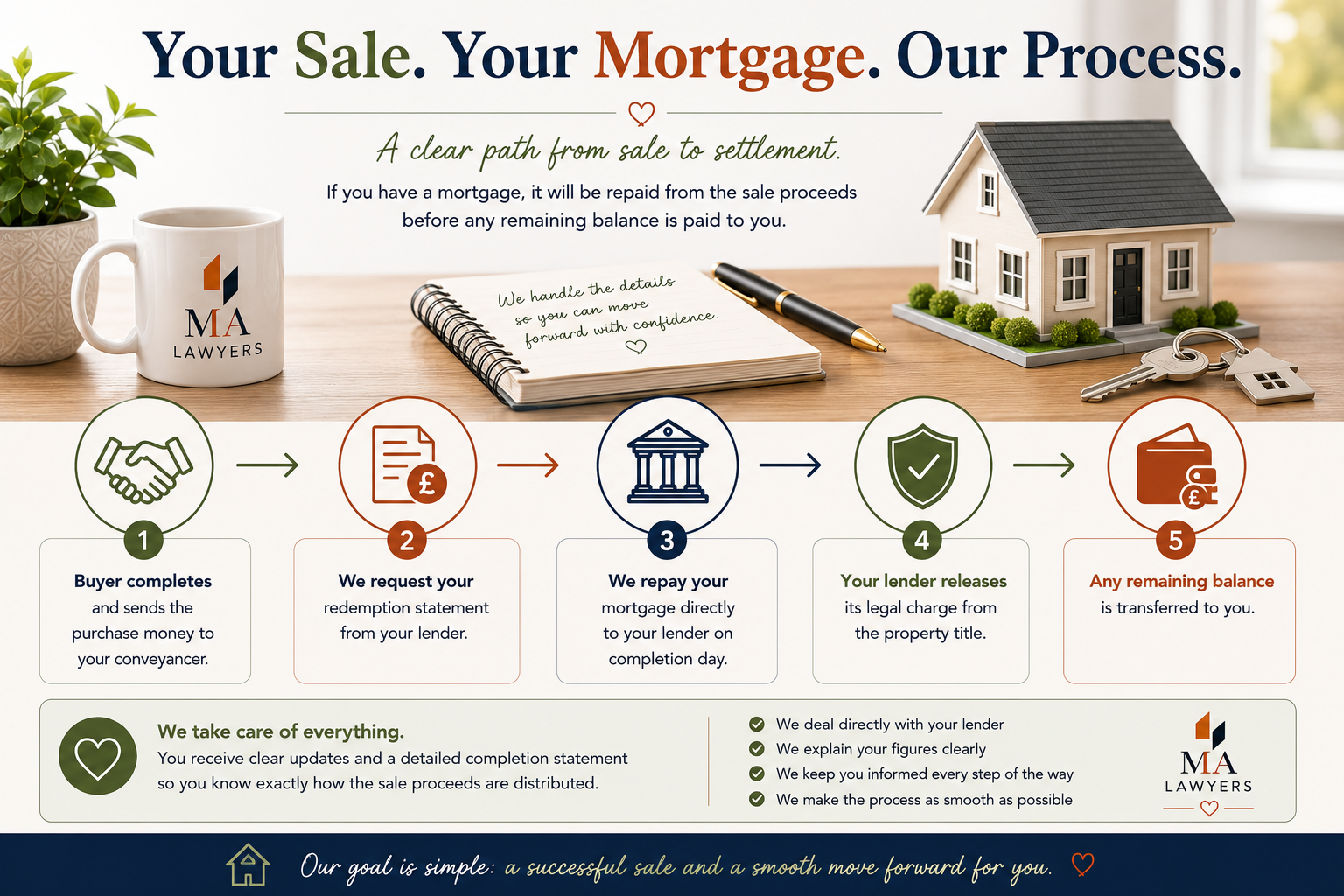
If you have a mortgage on your property, it will normally be repaid from the sale proceeds on the day of completion.
Before completion, your conveyancer will obtain a redemption statement from your lender confirming exactly how much is needed to repay your mortgage.
Once the sale has completed, your conveyancer will send the redemption money directly to your lender before transferring any remaining balance to you.
The Explanation
When you bought your property, your lender registered a legal charge against the title at HM Land Registry.
Before ownership can pass to the buyer, that legal charge must be removed.
Your conveyancer will therefore:
- Contact your lender for an up-to-date redemption statement.
- Check that the redemption figure will be covered by the sale proceeds.
- Redeem your mortgage immediately following completion.
- Ensure your lender releases its legal charge.
- Transfer any remaining balance of the sale proceeds to you.
If you're buying another property at the same time, your sale proceeds can usually be used towards your onward purchase once your existing mortgage has been redeemed.
Common Questions
Will I need to contact my mortgage lender?
Usually not.
Your conveyancer will obtain the redemption statement and deal directly with your lender as part of the legal process.
What is a redemption statement?
A redemption statement confirms the exact amount required to repay your mortgage on a specific date.
It includes the outstanding balance together with any interest due up to the proposed completion date.
What if I'm buying another property?
If you're selling and buying on the same day, your sale proceeds are normally used towards your purchase after your existing mortgage has been redeemed.
Could I have to pay an early repayment charge?
Possibly.
Some mortgage products include an early repayment charge if the mortgage is repaid before a particular date.
Your redemption statement will confirm whether any such charge applies.
Top Tip
If you've recently changed your mortgage product or you're planning to port your mortgage to another property, let your conveyancer know as early as possible.
Did You Know?
Redemption figures are only valid for a limited period because mortgage interest usually continues to accrue daily until the mortgage is repaid.
Common Misconception
"The sale money comes straight to me."
Not quite.
Your conveyancer must first repay your mortgage and deal with any authorised deductions before transferring the remaining balance to you.
The MA Lawyers Approach
At MA Lawyers, we'll obtain your redemption statement, check the figures carefully and deal directly with your lender to ensure your mortgage is repaid correctly on completion.
We'll explain your completion statement in advance so you know exactly how the sale proceeds will be distributed, giving you a clear understanding of what you'll receive once your sale has completed.
Related Articles
- When Will I Receive My Sale Proceeds?
- Why Is My Sale Taking So Long?
- Why Can't My Conveyancer Tell Me When We'll Complete?
- What If My Buyer Pulls Out?