
Whether you're buying your very first home or you've moved several times before, you've probably heard the word conveyancing.
But what does it actually mean?
Many people imagine piles of paperwork, complicated legal language and endless waiting.
The reality is quite different.
Conveyancing is the legal process of transferring ownership of a property from one person to another, but it's also about making sure you're buying or selling safely.
Behind every successful property transaction is a conveyancer working to uncover potential problems before they become your problems.
Our job isn't simply to help you move house—it's to help you move with confidence.
The Short Answer
Conveyancing is the legal process of transferring ownership of a property from the seller to the buyer.
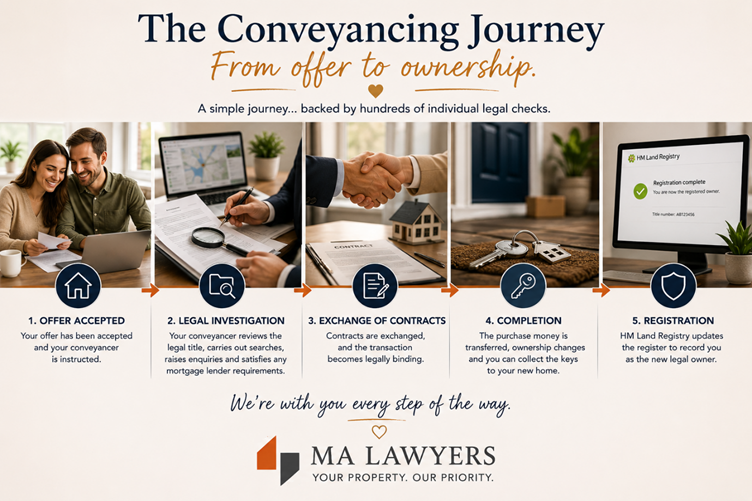
It begins when your offer has been accepted and continues until you're registered as the legal owner at HM Land Registry.
During that time, your conveyancer carries out legal investigations, checks important documents, works with your mortgage lender (where applicable), liaises with the other parties involved and ensures everything is in place for a safe and successful completion.
The Explanation
Buying a property may look simple from the outside.
You find a home you love, agree a price and collect the keys.
In reality, there's a great deal happening behind the scenes before ownership can legally change hands.
Your conveyancer is responsible for investigating the property from a legal perspective.
That means checking that the seller has the legal right to sell it, reviewing the title, identifying rights, restrictions and obligations, carrying out property searches, raising enquiries and ensuring there are no issues that could affect your ownership in the future.
If you're buying with a mortgage, your conveyancer also acts for your lender, ensuring the property provides suitable security for the loan and that the lender's legal requirements have been met.
Throughout the transaction, your conveyancer works with estate agents, mortgage lenders, the seller's conveyancer, search providers, HM Land Registry and, in some cases, managing agents, freeholders and local authorities.
It's often described as a legal process, but in reality it's a process of gathering information, solving problems and protecting your interests.
Sometimes everything progresses quickly.
Sometimes additional investigations are needed.
There may even be periods where it seems little is happening, but that's often because your conveyancer is waiting for information from third parties or carefully reviewing documents before the transaction can safely move forward.
Conveyancing isn't about completing paperwork for the sake of it.
It's about making sure that when you finally receive the keys to your new home, you know exactly what you're buying and there are no unexpected legal surprises waiting for you.
Common Questions
Is conveyancing only needed when buying a property?
No.
Conveyancing is required whenever legal ownership of a property changes. This includes buying, selling, remortgaging, transfers of equity, some leasehold matters and several specialist property transactions.
Why does conveyancing seem to take so long?
Although there are only a few key stages, each one relies on information being provided by a number of different people and organisations.
Your conveyancer is often waiting for search results, mortgage instructions, replies to enquiries or documents from third parties before the transaction can safely progress.
Can I do conveyancing myself?
In some circumstances, it's legally possible.
However, most buyers choose to instruct a conveyancer because of the legal complexity involved and because mortgage lenders will usually require a conveyancer to act on their behalf.
When does the property legally become mine?
Not when your offer is accepted.
Not when contracts are signed.
Ownership legally changes on Completion Day, when the purchase money is transferred and completion takes place.
Top Tip
Instruct your conveyancer as early as possible.
Having your conveyancer ready to act means the legal process can begin as soon as your offer is accepted, helping to avoid unnecessary delays at the very start of your transaction.
Did You Know?
The word "conveyancing" comes from the legal term "to convey", which simply means to transfer ownership of property from one person to another.
Common Misconception
"Conveyancing is just paperwork."
Not at all.
Most of a conveyancer's work involves investigating legal issues, identifying risks, asking questions, solving problems and protecting your interests long before completion takes place.
The paperwork simply records the outcome of all that work.
The MA Lawyers Approach
At MA Lawyers, we believe conveyancing is about far more than forms and legal documents.
It's about giving our clients the confidence to make one of life's biggest financial decisions, knowing that someone is looking after their legal interests every step of the way.
We'll explain the process in plain English, keep you informed as your transaction progresses and carry out the detailed legal work needed to help protect both you and your investment.
Whether you're buying your first home or your fifteenth, our aim is always the same—to make the legal process as straightforward, transparent and reassuring as possible.
Related Articles
- I've Had My Offer Accepted – What Happens Next?
- What Does My Conveyancer Actually Do?
- What Are Property Searches and Why Do I Need Them?
- Who Is Involved at Each Stage?
- Why Do Transactions Take So Long?