
One of the first things your conveyancer is likely to do after receiving the contract papers is order property searches.
It's a question we're often asked:
"What exactly are property searches, and what are they looking for?"
Although they can sometimes feel like just another expense, property searches provide important information that simply can't be discovered by viewing the property. They help identify issues that could affect your decision to buy, your ability to obtain a mortgage or even the future value and enjoyment of your home.
The Short Answer
Property searches are enquiries made with various organisations to obtain information about the property you're buying and the surrounding area.
They help identify matters that may not be obvious during a viewing, such as planning issues, drainage arrangements, environmental risks or whether the roads serving the property are publicly maintained.
Your conveyancer will review the results carefully and explain anything you need to know before you commit to buying the property.
The Explanation
When you view a property, you see its appearance and condition.
Property searches help reveal everything you can't see.
They are obtained from organisations such as the Local Authority, water company and environmental data providers and are designed to identify matters that may affect the property now or in the future.
Not every search is required for every purchase. The searches your conveyancer recommends will depend on the property's location and, where applicable, your mortgage lender's requirements.
For example, a property in a former mining area may require a mining search, whilst properties in certain locations may benefit from additional searches relating to flooding or other environmental considerations.
If anything unexpected is revealed, your conveyancer will explain what it means, whether further investigations are required and how it may affect your purchase.
Your Property Search Pack
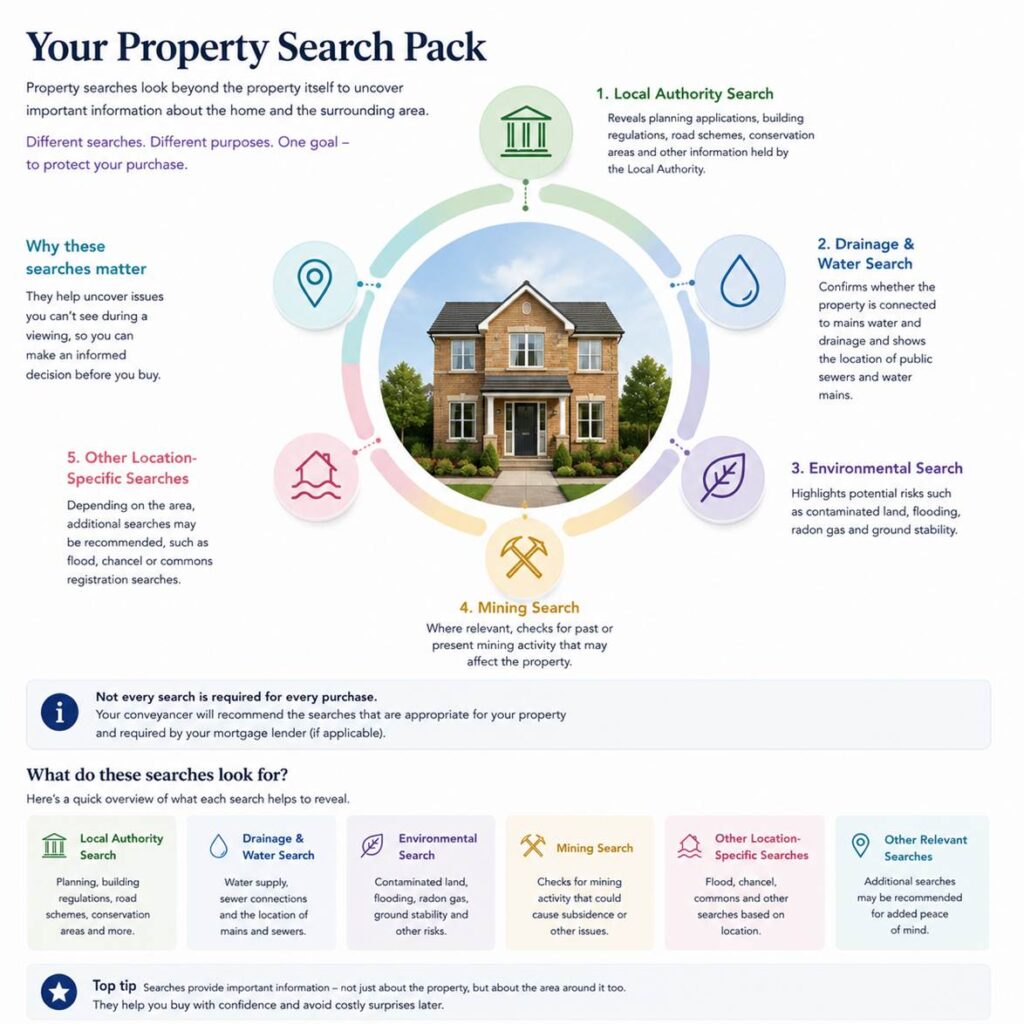
Please note: Every property is different. Your conveyancer will recommend the searches that are appropriate for your purchase and, where applicable, those required by your mortgage lender.
Common Questions
Can I buy a property without searches?
Sometimes, yes. Cash buyers can choose not to have searches carried out. However, this means important information about the property may remain unknown. Your conveyancer will explain the risks before you make that decision.
How long do searches take?
Search times vary depending on the organisation providing the information. Some are returned within a few days, whilst others, particularly Local Authority searches, can take longer.
What happens if a search reveals a problem?
Not every issue means you shouldn't buy the property. Your conveyancer will explain the result, advise you on any risks and, where necessary, raise further enquiries or recommend additional investigations.
Top Tip
Property searches aren't simply another cost, they're an investment in understanding exactly what you're buying before you become legally committed.
Did You Know?
Many issues revealed by property searches can't be discovered by viewing the property, speaking to the seller or even commissioning a survey.
Common Misconception
"The property looks fine, so the searches won't tell me anything new."
Some of the most important information about a property isn't visible. Searches can reveal matters such as future road schemes, planning restrictions, flood risks or public sewers running through the garden, things you simply wouldn't know from a viewing.
The MA Lawyers Approach
At MA Lawyers, we don't simply send you pages of search results and expect you to work them out for yourself.
We'll review every search carefully, explain any important findings in plain English and let you know if further investigations are required. If a search reveals something unexpected, we'll discuss your options with you so that you can make an informed decision before Exchange of Contracts.
Related Articles
What Is Exchange of Contracts?
What Is a Survey and Do I Need One?
What Enquiries Will My Conveyancer Raise?
Why Do Transactions Take So Long?